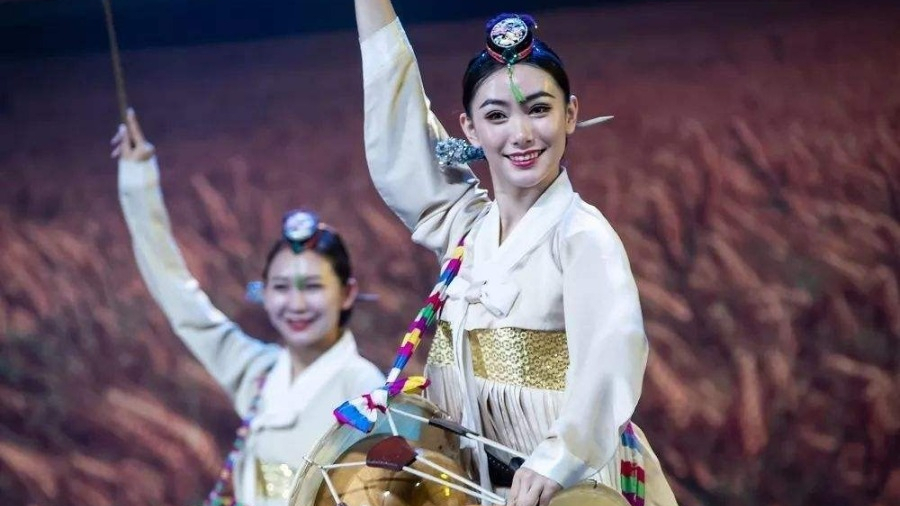
Farmers' Dance of China's Korean Ethnic Group
Overview
The Farmers' Dance of China's Korean ethnic group is a vibrant traditional dance deeply rooted in the cultural practices of the Korean community in northeastern China, particularly in Jilin province. This folkloric dance is an essential aspect of community festivals, where the Korean ethnic group gathers in fields or villages to perform rituals and celebrations. The dance is a tribute to nature, honoring the God of the Land with the hope of securing good fortune and a bountiful harvest. It represents a rich cultural heritage passed down through generations, embodying the community's history, values and collective memories.
Historical Context
The Farmers' Dance originated from its agricultural roots and evolved into a widely recognized cultural expression among Korean people in various regions, both urban and rural. The dance was traditionally performed during agrarian cycles and communal gatherings, where villagers would come together to celebrate and engage in social rituals. Over time, the dance has been adapted, incorporating elements from other ethnic groups and modern influences in costume and musical accompaniment, while maintaining its core symbolic gestures inspired by farming activities.
Musical and Dance Elements
The Farmers' Dance is characterized by its unique blend of music and dance, making it an engaging and dynamic performance. Musicians play traditional instruments such as the suona, an oboe-like wind instrument, bell-shaped gongs and various drums, creating a lively and rhythmic backdrop for the dancers. The dancers, who may be masked or unmasked, perform with exaggerated, farcical movements that mimic farming activities. Signature gestures include 'walking the field ridges', embodying the physical motions associated with agriculture. The interplay between the musicians and dancers results in a harmonious and spirited display that captivates audiences.
Cultural Significance
The Farmers' Dance is more than just a performance; it is a cultural emblem that encapsulates the Korean ethnic group's deep connection to the land and their agricultural way of life. It reflects the community's values and beliefs, rooted in respect for nature and the cycles of life. The dance serves as a means of cultural transmission, with older generations teaching younger members the techniques and significance of the dance, ensuring its continuation. It also promotes community cohesion, as the performance requires collective participation and cooperation, enhancing social bonds and cultural identity.
Modern Development
As society has evolved, so too has the Farmers' Dance. The introduction of new elements has revitalized the dance, making it relevant to contemporary audiences while preserving its traditional core. Changes in the musical ensemble, including the addition of more diverse wind instruments, and influences from other ethnic groups in costume design, have enriched the performance. Despite these changes, the dance remains a quintessential expression of Korean ethnic culture in China, celebrated and cherished by the community and recognized as an important part of the country's intangible cultural heritage. Article reference1. Farmers’ dance of China’s Korean ethnic group. chinaservicesinfo.com. 2019Photo Gallery(3 pictures)CategoriesCultural HeritageTagIntangible Cultural Heritage of Humanity in ChinaIntangible Cultural HeritageChinese DanceCatalogue1. Overview2. Historical Context3. Musical and Dance Elements4. Cultural Significance5. Modern Development- - - []
来源: Culturepedia - Farmers' Dance of China's Korean Ethnic Group








